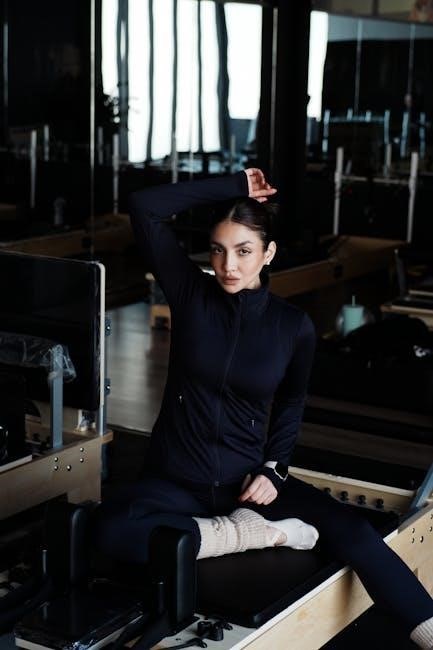
Pilates Reformer Exercises PDF ⏤ Free Download: A Comprehensive Guide
Discover a wealth of resources for Pilates Reformer exercises in easily downloadable PDF format! Explore comprehensive guides offering routines for all levels,
from beginner foundations to advanced challenges, enhancing strength and flexibility․
What is Reformer Pilates?
Reformer Pilates is a dynamic and effective exercise method utilizing a specialized machine – the Pilates Reformer․ Unlike traditional mat Pilates, the Reformer incorporates springs, straps, and a sliding carriage to provide resistance and assistance, offering a full-body workout with a focus on core strength, flexibility, and postural alignment․
This unique system allows for a diverse range of exercises, catering to all fitness levels․ The springs provide adjustable resistance, enabling modifications for beginners while simultaneously challenging advanced practitioners․ It’s a low-impact workout, making it suitable for individuals recovering from injuries or seeking a gentle yet powerful form of exercise․ The sliding carriage adds an element of instability, engaging stabilizing muscles throughout each movement․
Essentially, Reformer Pilates isn’t about simply going through the motions; it emphasizes precise control, mindful movement, and a deep connection between mind and body, leading to improved strength, flexibility, and overall well-being․
The Benefits of Reformer Pilates
Reformer Pilates offers a multitude of benefits extending far beyond just physical fitness․ It significantly enhances core strength, improving posture and stability, which translates to better everyday movement․ The spring resistance builds lean muscle mass without bulk, promoting a toned physique․
Furthermore, Reformer Pilates dramatically improves flexibility and range of motion, alleviating muscle tension and preventing injuries․ The controlled movements foster mind-body connection, reducing stress and increasing body awareness․ It’s a low-impact exercise, gentle on joints, making it suitable for various fitness levels and rehabilitation․
Beyond the physical, Reformer Pilates can improve balance and coordination, enhance athletic performance, and contribute to a greater sense of well-being․ It’s a holistic approach to fitness, addressing both physical and mental health, offering a pathway to a stronger, more balanced, and resilient you․
Reformer Pilates vs․ Mat Pilates
Reformer Pilates and Mat Pilates both stem from the same foundational principles, but differ significantly in execution and benefits․ Mat Pilates utilizes body weight for resistance, focusing on precise movements and core engagement on a mat․ It’s accessible and requires minimal equipment․
Reformer Pilates, however, employs a specialized machine with springs and a carriage, providing adjustable resistance and support․ This allows for a wider range of exercises and greater challenge, particularly for building strength and endurance․ The reformer assists and challenges simultaneously, making it adaptable for all levels․
While Mat Pilates emphasizes control and form, the reformer adds an element of dynamic movement and spinal decompression․ Reformer Pilates can be particularly beneficial for rehabilitation and addressing muscle imbalances․ Both are effective, but the reformer offers a more versatile and potentially faster route to strength gains․
Understanding the Reformer Machine
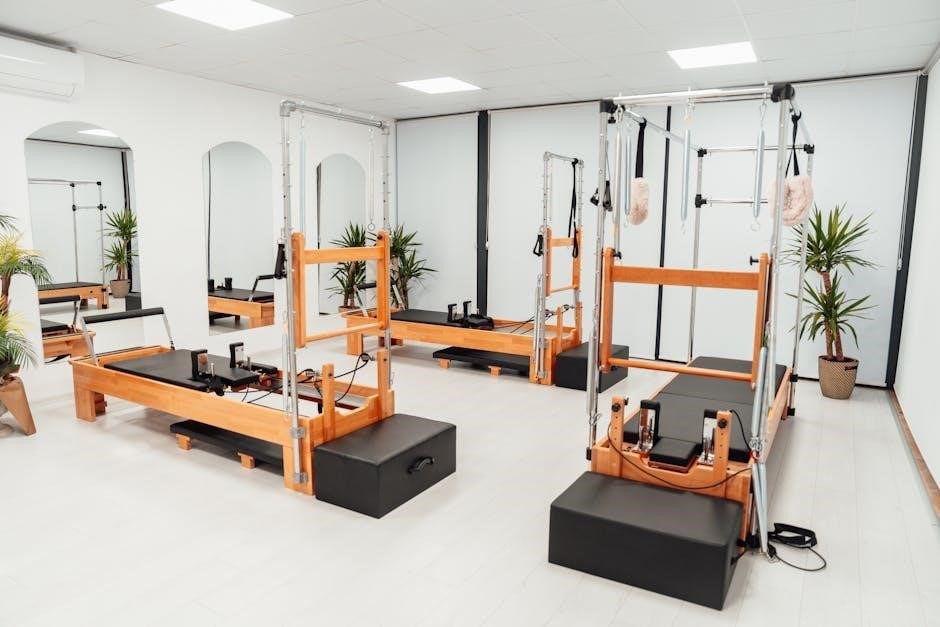
The Pilates Reformer is a bed-like frame with a flat platform that rolls back and forth on wheels․ It utilizes a system of springs, straps, and pulleys to provide resistance and assistance during exercises․ This innovative design allows for a full-body workout targeting strength, flexibility, and core stability․
Unlike solely bodyweight exercises, the reformer’s adjustable springs enable customized resistance levels, catering to diverse fitness levels and rehabilitation needs․ The sliding carriage challenges balance and coordination, while straps provide support and facilitate various movements․
Understanding the reformer’s components – the carriage, footbar, headrest, and springs – is crucial for safe and effective use․ Proper setup and adjustments are key to maximizing benefits and preventing injury․ Many PDF guides detail these aspects, offering visual aids and step-by-step instructions for beginners․
Key Components of a Pilates Reformer
Pilates Reformers consist of several key components working in harmony․ The carriage, the sliding platform, is central to all exercises, providing a moving base․ Springs, varying in resistance, offer adjustable challenge and support, crucial for personalized workouts․
The footbar, adjustable in height and angle, anchors feet or hands, aiding in specific movements․ A headrest provides neck support and assists with spinal alignment․ Straps, with varying lengths and attachments, offer additional support and exercise variations․
Understanding these components is vital for safe and effective use․ PDF guides often include detailed diagrams labeling each part and explaining its function․ Knowing how to adjust these elements allows users to modify exercises, increasing or decreasing intensity based on their fitness level and goals․ Proper component knowledge enhances workout efficacy․
Essential Reformer Pilates Exercises for Beginners
Beginner Reformer Pilates focuses on foundational movements to build core strength and body awareness․ Footwork is paramount, establishing carriage control and leg engagement – many PDF guides start here․ The Hundred, adapted for the Reformer, builds core endurance and coordination, challenging abdominal stability․
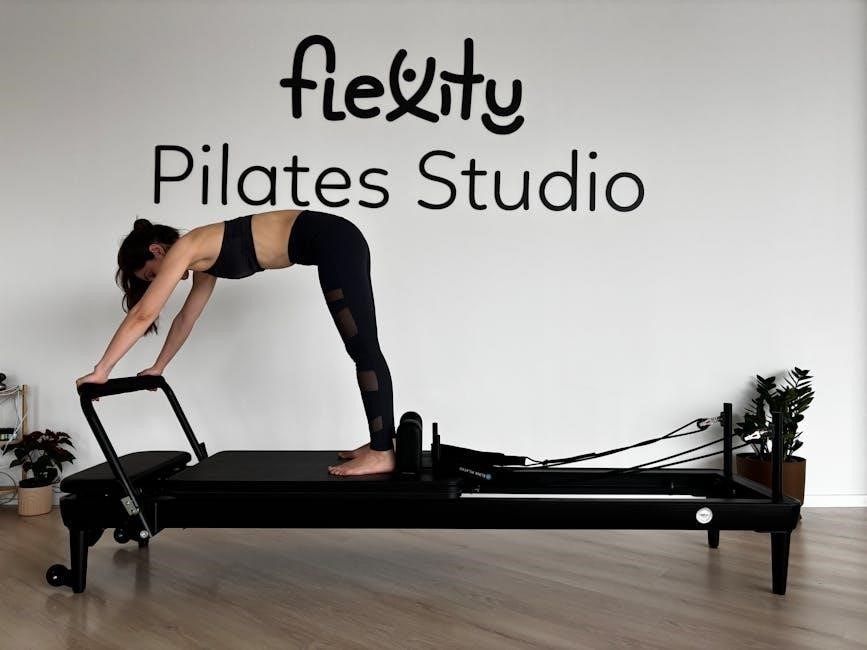
Short Spine Massage gently articulates the spine, improving flexibility and promoting spinal health․ These exercises emphasize precise movements and controlled breathing․ Free PDF resources often provide step-by-step instructions with visual aids, ensuring correct form․
Prioritize mastering these basics before progressing․ Focus on maintaining proper alignment and engaging the core throughout each exercise․ Beginner PDFs typically offer modifications for varying fitness levels, making Pilates accessible to everyone․
Footwork Series
Footwork on the Reformer is the cornerstone of Pilates, building foundational strength and control․ PDF guides dedicated to this series typically present variations – heels only, toes only, arches, and parallel – progressively challenging leg and foot articulation․ It establishes a deep connection to the carriage and spring resistance․
Beginners often start with heels only, focusing on maintaining a stable pelvis and engaging the core․ As proficiency grows, toes only increases the challenge to foot intrinsic muscles․ PDF resources emphasize precise alignment – maintaining a neutral spine and avoiding gripping with the toes․
Proper execution enhances ankle mobility and strengthens the entire lower body․ Many free PDFs include modifications for different spring tensions, allowing for personalized intensity․
Hundred Exercise on the Reformer
The Hundred, a classic Pilates exercise, gains a unique dimension on the Reformer․ PDF guides detail how the carriage’s resistance amplifies core engagement and spinal stabilization․ Typically, you’ll lie supine with feet in straps, utilizing the springs to assist or challenge the movement․
The exercise involves pumping the arms while maintaining a curled spine and engaging the abdominal muscles․ Free PDF resources often highlight the importance of keeping the head and shoulders lifted, avoiding strain in the neck․ Variations include different arm positions and carriage settings․
PDFs emphasize coordinating breath with the pumping action – inhaling for five pumps and exhaling for five, completing 10 breath cycles․ Mastering this exercise builds endurance and deep core strength․
Short Spine Massage
Short Spine Massage on the Reformer is a gentle yet effective exercise detailed in many Pilates Reformer exercise PDFs․ It focuses on articulating the spine, increasing mobility, and releasing tension in the back muscles․ You begin seated on the carriage, facing the footbar, with legs extended․
PDF guides illustrate how to round the spine forward, rolling the carriage back slightly, then stack the spine tall, moving the carriage forward․ This creates a massaging effect along the spine․ Proper form, as shown in free PDF resources, emphasizes controlled movement and core engagement․
Variations often involve adding arm movements or head nods to deepen the stretch․ PDFs stress the importance of maintaining a neutral neck and avoiding any sharp or jarring motions․ It’s a fantastic exercise for improving posture and spinal health․
Intermediate Reformer Pilates Exercises
Intermediate Reformer Pilates exercises, readily available in downloadable PDF guides, build upon foundational movements, demanding greater core strength, control, and coordination․ These routines often incorporate more complex spring settings and transitions․
Many free PDF resources showcase exercises like the Long Stretch Series, challenging spinal articulation and hamstring flexibility․ The Teaser on the Reformer, a classic intermediate move, requires significant abdominal strength and balance, with detailed instructions in PDFs․
The Spine Twist, also frequently featured, enhances rotational mobility and core stability․ PDF guides emphasize maintaining proper alignment and controlled breathing throughout each exercise․ Progressing to this level requires a solid understanding of Pilates principles․
Long Stretch Series
The Long Stretch Series on the Pilates Reformer, often detailed in free PDF guides, is a cornerstone of intermediate-level training․ This series focuses on lengthening the spine, strengthening the core, and improving hamstring flexibility through controlled movements․
PDF resources typically break down the series into several progressive exercises, starting with gentle spinal articulation and gradually increasing the range of motion․ Proper form is crucial; guides emphasize maintaining a neutral spine and engaging the core throughout․
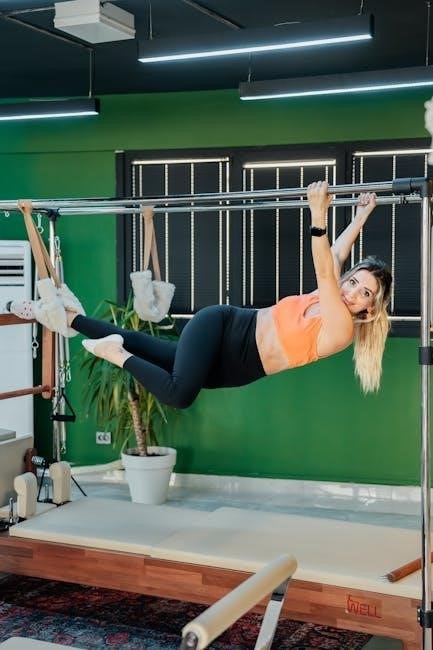
Variations within the series often involve different arm and leg positions, challenging stability and coordination․ PDFs provide visual cues and step-by-step instructions, ensuring safe and effective execution․ Mastering this series builds a strong foundation for more advanced Reformer work․
Teaser on the Reformer
The Reformer Teaser, frequently illustrated in Pilates Reformer exercise PDFs, is an intermediate to advanced exercise demanding significant core strength and control․ It builds upon the classic Mat Pilates Teaser, utilizing the Reformer’s carriage and springs for added challenge and support․
PDF guides typically detail progressions, starting with modifications like bent knees or assisted springs to build foundational strength․ The exercise involves rolling the spine off the carriage while maintaining a stable pelvis and engaged core․
Proper alignment is paramount; PDFs emphasize keeping the shoulders stacked and the abdominals deeply drawn in․ Mastering the Reformer Teaser enhances core stability, spinal articulation, and overall body awareness, often with detailed visual breakdowns․
Spine Twist
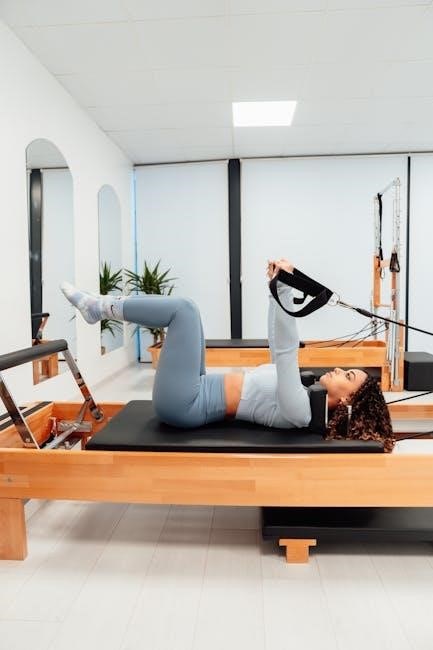
Spine Twist on the Reformer, commonly detailed in Pilates Reformer exercise PDFs, is a versatile exercise targeting oblique strength, spinal mobility, and core control․ It’s often presented with variations to suit different fitness levels, from beginner to advanced․
PDF guides illustrate how to use the Reformer’s footbar for leverage and resistance, initiating the twist from the thoracic spine while maintaining a stable pelvis․ Proper form emphasizes a long spine and controlled rotation, avoiding strain on the lower back․
Many PDF resources showcase progressions, like adding arm reaches or using different spring tensions․ Mastering this exercise improves rotational strength, enhances posture, and promotes spinal health, often with clear step-by-step instructions and imagery․
Advanced Reformer Pilates Exercises
Advanced Reformer Pilates exercises, frequently found in detailed PDF guides, demand significant core strength, control, and body awareness․ These routines build upon foundational movements, incorporating complex sequences and increased resistance․
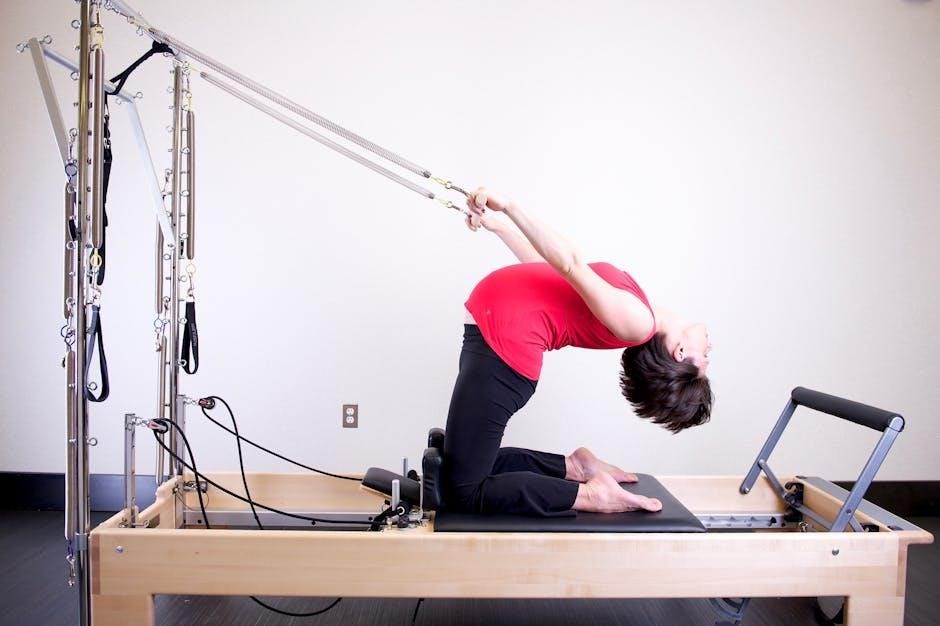
PDF resources often feature exercises like the Reformer Roll Up, challenging spinal articulation and abdominal engagement․ The Standing Series utilizes the moving carriage for dynamic balance and leg strengthening, while the Reformer Jumping Series adds a cardiovascular element․
These advanced movements require precise technique to prevent injury, making comprehensive PDF instructions invaluable․ Expect detailed cues on spring settings, footwork, and breathing patterns, pushing your Pilates practice to new heights․
Reformer Roll Up
Reformer Roll Up, a challenging advanced exercise detailed in many Pilates Reformer exercise PDFs, focuses on spinal articulation and deep core engagement․ It’s a progression from the Mat Pilates Roll Up, utilizing the reformer’s support and resistance․
PDF guides emphasize starting with feet firmly planted and engaging the abdominal muscles to initiate the roll-up, vertebra by vertebra․ Maintaining a neutral spine and controlled movement is crucial․ Spring tension is adjusted to provide appropriate challenge without compromising form․
Detailed PDF instructions often include modifications for varying fitness levels, such as using head support initially․ Mastering this exercise enhances core strength, improves spinal mobility, and promotes overall body control․
Standing Series on the Reformer
Standing Series on the Reformer, frequently outlined in Pilates Reformer exercise PDFs, introduces a unique dimension to traditional Pilates, challenging balance and stability․ These exercises utilize the reformer carriage for dynamic movement while maintaining an upright posture․
PDF resources typically detail exercises like standing arm work, leg lifts, and rotational movements, emphasizing core engagement to control the carriage․ Proper alignment and controlled transitions are paramount for safety and effectiveness․
Many PDF guides suggest starting with lighter spring tensions and gradually increasing resistance as strength and control improve․ This series enhances postural awareness, strengthens lower body muscles, and improves coordination․
Reformer Jumping Series
Reformer Jumping Series, often detailed in comprehensive Pilates Reformer exercise PDFs, adds a cardiovascular element to the traditional practice, building power and endurance․ These exercises involve controlled jumps and landings on the reformer carriage, demanding significant core stability․
PDF guides typically showcase variations like tuck jumps, pike jumps, and split jumps, progressing in difficulty․ Emphasis is placed on maintaining proper alignment and soft landings to protect the joints․
Beginners should start with small, controlled jumps and gradually increase the height and intensity as their strength and coordination improve․ Many PDF resources highlight the importance of engaging the core throughout the series to prevent injury and maximize effectiveness․
Finding Free Pilates Reformer Exercise PDFs
Accessing free Pilates Reformer exercise PDFs is surprisingly achievable with a bit of online searching․ Numerous websites offer downloadable resources, catering to various skill levels – from introductory routines to advanced sequences․ However, discerning quality is crucial․
Many fitness blogs and instructor websites provide sample workouts or introductory guides as PDF downloads to attract clients․ Social media platforms like Pinterest can also be valuable sources, linking to free resources․
Be cautious of websites with excessive advertisements or unclear origins․ Prioritize resources from certified Pilates instructors or reputable studios․ Always review the PDF content before attempting exercises, ensuring it aligns with your fitness level and goals․
Reputable Websites Offering Free PDFs
Several trustworthy online platforms provide free Pilates Reformer exercise PDFs․ Blogilates, created by Cassey Ho, often features Pilates-inspired routines adaptable for the Reformer, sometimes offered as downloadable guides․ Pilates Anytime, while primarily a subscription service, occasionally releases free content, including introductory PDFs․
YouTube channels of certified Pilates instructors frequently link to supporting PDF materials in their video descriptions․ Look for instructors with established credentials and positive reviews․ Many Pilates studios also offer free introductory resources on their websites to attract new clients․
Mindbody, a platform for booking fitness classes, sometimes hosts articles and downloadable guides related to Pilates․ Always verify the source’s credibility before downloading and using any exercise PDF․
What to Look for in a Quality PDF
A high-quality Pilates Reformer exercise PDF should prioritize clear, concise instructions․ Look for detailed exercise descriptions accompanied by high-resolution images or illustrations demonstrating proper form․ The PDF should specify the spring settings appropriate for each exercise, catering to varying resistance levels․
Credibility is key; the PDF should clearly identify the author or source, ideally a certified Pilates instructor․ A good resource will outline modifications for different fitness levels, ensuring accessibility for beginners and challenges for advanced practitioners․
Safety cues and warnings should be prominently featured, emphasizing the importance of controlled movements and proper alignment․ Avoid PDFs with vague instructions or lacking visual aids, as these can increase the risk of injury․
Safety Considerations for Reformer Pilates
Reformer Pilates, while low-impact, demands mindful attention to safety․ Prioritize proper form over the number of repetitions; incorrect alignment can lead to strain or injury․ Always begin with a thorough warm-up to prepare muscles and joints for movement․
Listen to your body and stop if you experience any pain․ Modifications are crucial – don’t hesitate to adjust exercises to suit your fitness level․ Ensure the reformer carriage is securely locked before mounting or dismounting․
If using a PDF for guidance, verify the source’s credibility․ Ideally, supplement PDF instruction with sessions from a qualified instructor, especially when starting․ Be aware of your surroundings and maintain adequate space around the reformer․
Proper Form and Technique
Mastering proper form is paramount in Reformer Pilates to maximize benefits and prevent injury․ Focus on initiating movement from your core – the “powerhouse” – maintaining a neutral spine throughout each exercise․ Engage your abdominal muscles to stabilize the pelvis and lower back․
Pay close attention to alignment; shoulders should be relaxed, and your body should maintain a long, streamlined shape․ Controlled movements are key; avoid rushing or using momentum․ When utilizing a PDF guide, carefully study accompanying images or videos to understand correct positioning․
Remember precision is valued over speed․ A qualified instructor can provide personalized feedback, ensuring you execute exercises with optimal technique, even when supplementing with PDF resources․
Modifications for Different Fitness Levels
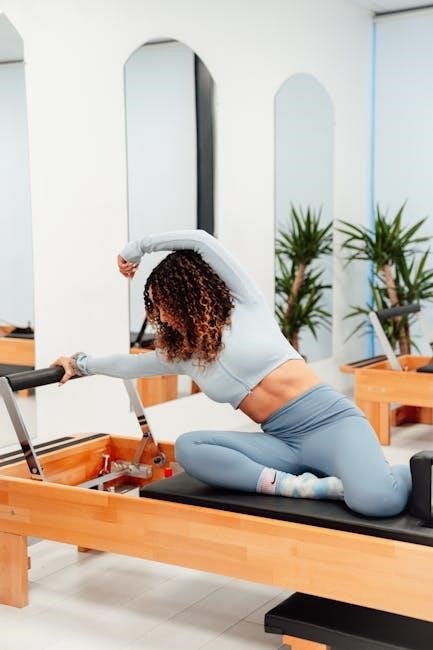
Pilates Reformer exercises are adaptable to various fitness levels․ PDF guides often include modifications to increase or decrease the challenge․ Beginners can start with lighter spring tensions and fewer repetitions, focusing on foundational movements․
For those with limited mobility, exercises can be modified by reducing the range of motion or utilizing support․ More advanced practitioners can increase spring resistance, add pulses, or incorporate more complex variations;
When using a PDF, look for suggested progressions and regressions․ Listen to your body and prioritize proper form over attempting advanced movements prematurely․ A qualified instructor can provide tailored modifications based on individual needs and limitations, complementing your PDF-based practice․
Common Mistakes to Avoid
When utilizing Pilates Reformer exercises from PDF guides, be mindful of common errors․ Avoid overarching the lower back, especially during exercises like the roll-up; maintain a neutral spine․ Many beginners struggle with proper core engagement – actively draw your navel towards your spine throughout each movement․
Another frequent mistake is rushing through exercises․ Pilates emphasizes controlled movements; focus on precision and quality over speed․ Incorrect hand or foot placement on the carriage can also compromise form and effectiveness․
Always prioritize proper technique over increasing resistance․ PDF resources can help, but ideally, supplement with guidance from a qualified instructor to correct form and prevent injuries․ Pay attention to your body and stop if you feel pain․
Integrating Reformer Pilates into Your Routine
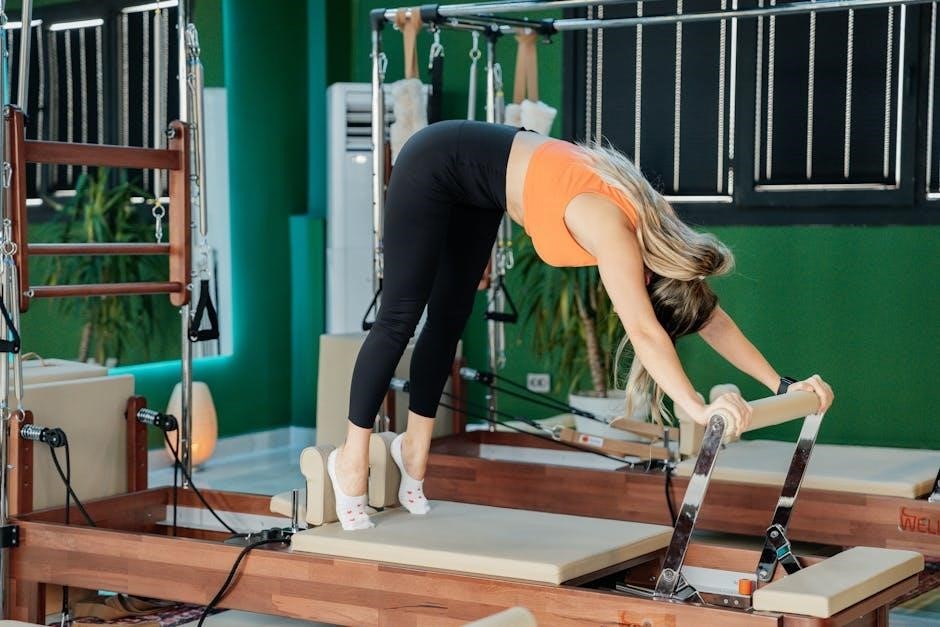
Seamlessly blend Reformer Pilates, guided by your downloaded PDF resources, into your existing fitness regimen․ Begin with 2-3 sessions per week, allowing for adequate muscle recovery between workouts․ Consider incorporating Pilates as a cross-training activity to complement cardio and strength training․
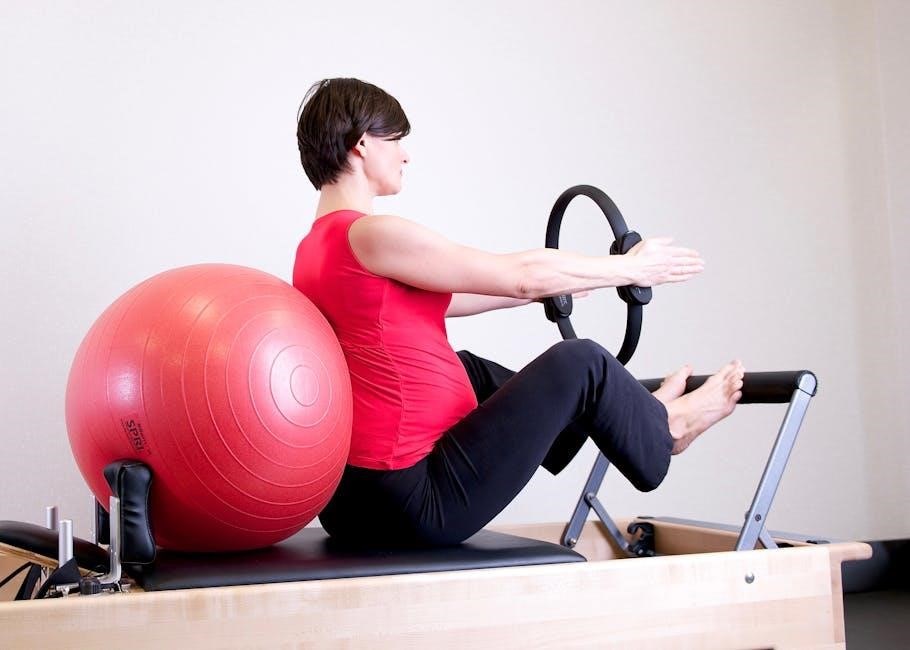
Prioritize a warm-up before each session, focusing on spinal mobility and core activation․ Cool-down stretches are equally crucial for maintaining flexibility and preventing soreness․ Listen to your body; adjust the intensity and duration based on your fitness level․
Don’t hesitate to alternate between full-body routines and targeted exercises from your PDF, addressing specific muscle groups․ Consistency is key – even short, focused sessions can yield significant benefits over time․
Frequency and Duration of Workouts
Utilizing your Pilates Reformer exercises PDF, aim for a balanced approach to workout frequency․ Beginners should start with 2-3 sessions weekly, each lasting 30-45 minutes, focusing on foundational movements․ As strength and control improve, gradually increase to 3-4 sessions․
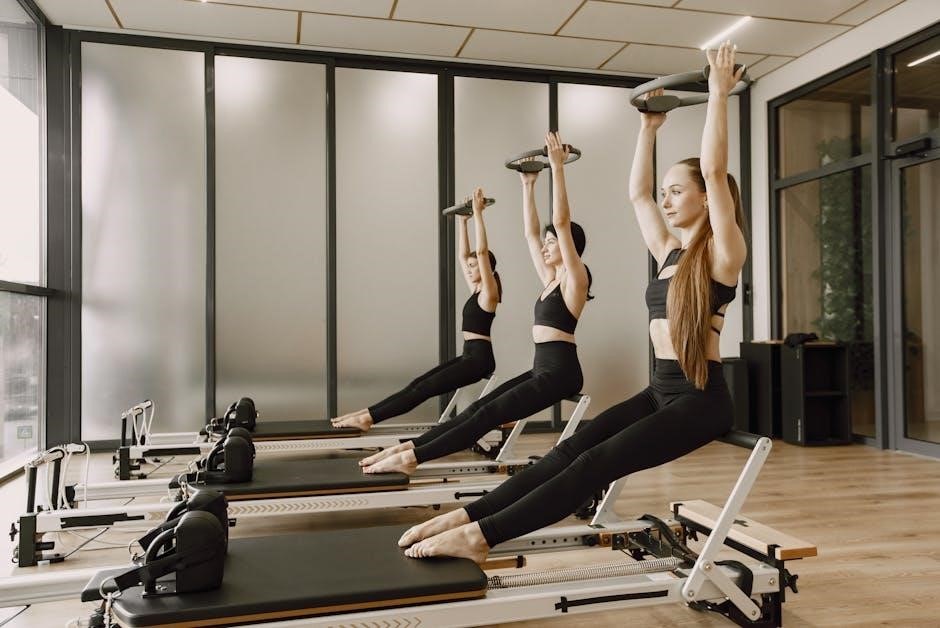
Intermediate and advanced practitioners can benefit from longer sessions (45-60 minutes) and potentially more frequent workouts, up to 5 times per week, depending on recovery․ Remember, quality trumps quantity; prioritize precise form over rushing through exercises․
Downloadable PDF guides often suggest workout splits – for example, dedicating one session to lower body, another to core, and a third to full-body integration․ Listen to your body and adjust accordingly!
Complementary Exercises
Enhance your Pilates Reformer practice, guided by your PDF resources, by incorporating complementary exercises․ Strength training, focusing on core and glutes, amplifies the benefits of Reformer work, building overall power․ Consider adding exercises like squats, lunges, and planks․
Flexibility work, such as static stretching or yoga, improves range of motion and prevents injury․ Foam rolling can also release muscle tension, aiding recovery․ Cardiovascular exercise, like walking or swimming, boosts endurance and supports overall fitness․
Integrating these elements creates a well-rounded routine․ Your Pilates Reformer exercises PDF can be a springboard for a holistic approach to wellness, maximizing results and promoting long-term health․
The Role of a Qualified Instructor
While Pilates Reformer exercises PDFs offer valuable guidance, a qualified instructor remains crucial for safe and effective practice․ They provide personalized form correction, preventing injuries and maximizing results – something a PDF cannot replicate․
An instructor can tailor exercises to your specific needs and fitness level, adapting routines based on individual limitations or goals․ They offer modifications and progressions, ensuring continuous challenge and growth․ They also understand biomechanics and can address imbalances․
Consider using your PDF as a supplement to studio sessions or private lessons․ A skilled instructor will elevate your understanding and technique, unlocking the full potential of the Reformer and ensuring a rewarding Pilates journey․